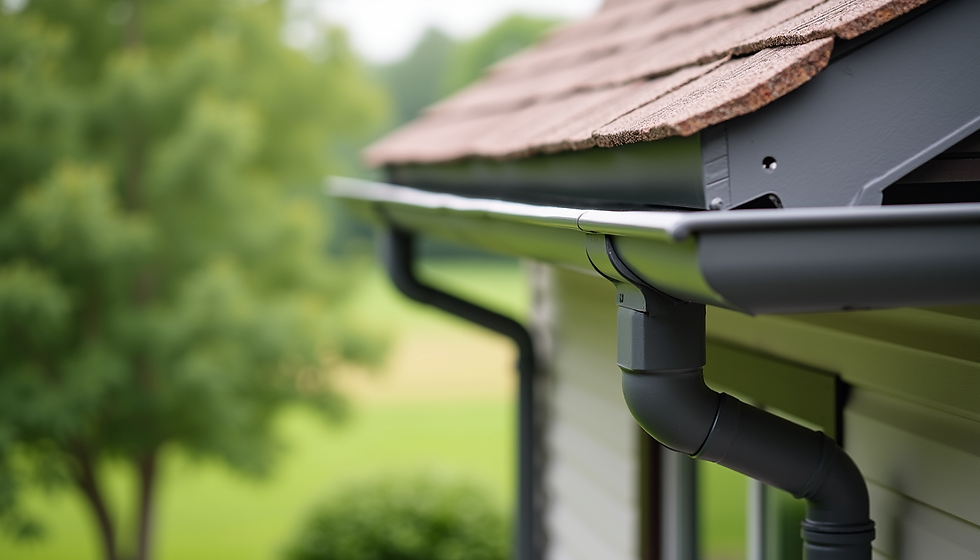
What Causes Overflowing Gutters in Green Bay

Water pouring over the front of your gutters is more than a rainy-day nuisance. It is often your home’s way of showing that the gutter system cannot move water where it needs to go.
After several weeks of summer weather, gutters can collect more than most homeowners realize. Rain, wind, leaves, seeds, roof grit, twigs, and material carried by birds or nearby trees can all end up inside the system. When the next heavy storm rolls through, that buildup can keep water from draining fast enough.
Overflowing gutters are common, but they should not be ignored. The longer water spills over the edge or runs down the side of the house, the greater the chance it can affect siding, fascia, landscaping, and the foundation area below.

Clogged gutters are a common cause
One of the most common reasons gutters overflow is simple blockage.
Leaves, twigs, seeds, shingle grit, and other debris can collect inside the gutter channel. Water may still enter the gutter, but it cannot move toward the downspout quickly enough. During light rain, the problem may go unnoticed. During a downpour, the gutter fills faster than it drains.
A clog near the downspout opening can cause an entire run of gutter to back up. Once the water reaches the top, it has nowhere to go except over the sides.
This can create several problems at once:
Extra weight
Wet debris and standing water are heavy. That added weight can pull on hangers, fasteners, and seams.
Sagging sections
A sagging gutter may hold even more water, which makes the drainage problem worse.
Fascia damage
When water sits against the roof edge or spills behind the gutter, the fascia board can stay damp longer than it should.
Foundation-area pooling
Overflowing water often lands close to the house, right where downspouts are meant to prevent saturation.
If the gutter is packed with debris, cleaning it may solve the immediate problem. Still, it is worth checking whether the clog caused strain on the system.
The downspout may be blocked
Sometimes the gutter itself looks fairly clean, but water still pours over the front. In that case, the downspout may be the issue.
Debris can get trapped in several places:
Near the top opening
Inside an elbow
Behind a bend
Lower in the vertical downspout
At the outlet near the ground
Because these blockages are not always visible, it is easy to misread the problem. A homeowner may assume the gutter is too small or poorly installed when the real issue is a hidden clog in the drainage path.
A blocked downspout can cause water to back up through the gutter run. During heavy rain, the gutter fills like a trough. The first sign may be a waterfall over one section of the roofline.
The gutters may not have the right pitch
Gutters need a slight slope to move water toward the downspouts. This slope is called pitch. If the pitch is too flat, water can sit in the gutter instead of draining. If the pitch leans the wrong way, water may move away from the downspout.
Pitch problems can happen for a few reasons. Fasteners may loosen over time. Heavy debris loads can pull sections out of position. Ice, wind, ladder pressure, or normal settling can also affect alignment.
Signs of poor pitch include:
Water sitting in the gutter long after rain stops
Overflow happening in the middle of a run
Water collecting at the end opposite the downspout
Visible sagging or uneven gutter lines
For overflowing gutters in Green Bay, pitch can be especially important because seasonal weather changes can stress the system over time. Summer storms, fall leaves, winter freeze-thaw cycles, and spring runoff all test whether the gutter line still drains correctly.
A professional inspection can determine whether the gutter needs adjustment, repair, or replacement.
The gutter system may be undersized for the roof
A gutter can be clean, properly pitched, and still overflow if it cannot handle the amount of water coming off the roof.
Roof size and roof pitch both affect runoff. A large, steep roof can send a lot of water into one gutter section very quickly. If too much roof area drains to too few downspouts, water may build up during heavy rain.
This does not always mean the entire gutter system is wrong. In some cases, adding or relocating a downspout can help. In other cases, larger gutters may be needed to manage the volume of water more effectively.
This is especially noticeable during short, intense storms. The gutter may work fine during steady rain, then overflow when rainfall becomes heavy.

Roof debris can wash into the system
Gutters do not only collect leaves. They also catch material from the roof itself.
As shingles age, they can shed granules. Small bits of roofing material may wash down during storms. Nearby trees can drop seeds, pods, flowers, and small branches. Birds and animals may also leave nesting material or debris near the roofline.
This mix can settle at low points in the gutter. Over time, it forms a dense layer that slows water flow. Unlike dry leaves, this material can be heavy and compact. It may not blow out on its own, and it can be difficult to spot from the ground.
If gutter overflow keeps happening soon after cleaning, roof debris may be part of the pattern.
Watch where the water goes
Overflow is not only about the gutter. It is also about where the water lands.
If water spills over the front and drops near the foundation, it can saturate soil close to the house. If it runs behind the gutter, it may affect the fascia or soffit. If it streams down siding, it can leave stains and keep exterior materials wet longer than intended.
During the next rainfall, watch for these warning signs from a safe spot:
Water pouring over one specific section
Water backing up near a downspout
Water running behind the gutter
Sagging or pulling at the fascia
Splashing that damages mulch or landscaping below
Downspouts with little or no water coming out
These clues can help identify whether the issue is a clog, pitch problem, downspout blockage, or drainage capacity issue.

When to schedule an inspection
A one-time overflow during an unusually heavy storm may not mean the whole system has failed. But repeated overflow should be checked.
Schedule an inspection if water spills over during normal rain, if downspouts do not drain, or if gutters look loose, sagging, or separated from the fascia. It is also smart to have the system checked after major seasonal debris buildup, especially if trees hang near the roof.
A professional can inspect the entire path water takes, from the roof edge to the gutter, through the downspout, and away from the home. That full view matters because the visible overflow is often only the symptom.
The key takeaway is simple: gutters overflow for a reason. Finding that reason early can help prevent bigger repairs later. If water is pouring over the edge, backing up at the downspout, or running down the side of the house, the gutter system is asking for attention.